
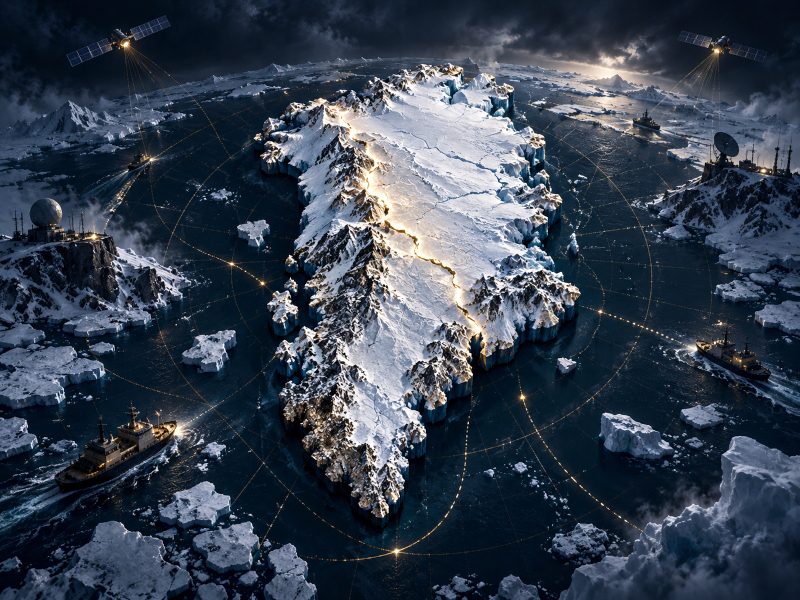
Donald Trump wanted all of Greenland: its territory, ownership and control. He did not get it. Denmark retains sovereignty, Greenlanders preserve their right to determine the island’s future, and maps will continue to show it as part of the Danish realm. Yet it would be a mistake to confuse that legal defeat with a strategic one.
The new agreement gives the United States a permanent military presence, room to expand its facilities and a decisive role in determining who may — and may not — gain a foothold on the island. Trump did not receive the title deed, but he appears to have secured the keys, the alarm system and the right to look under the bed.
Washington already operated Pituffik Space Base and enjoyed military access under the 1951 defence agreement. Those claiming that “nothing has really changed” are therefore not entirely wrong. But neither are they entirely right: turning a longstanding presence into a permanent and expandable arrangement explicitly designed to exclude China, Russia and other non-NATO actors amounts to rather more than replacing the welcome mat.
The crucial word is permanent. Few words age worse in diplomacy. Governments change, threats evolve and alliances adjust; permanence usually lasts only until a power capable of challenging it comes along. In the meantime, the word helps present as a historic conquest what, in less heroic language, remains an agreement awaiting signature, parliamentary ratification and the publication of its full provisions.
Mette Frederiksen can maintain that Danish sovereignty remains intact, while Jens-Frederik Nielsen can say that the agreement benefits Greenland. Both have a case: the deal avoids the annexation Trump once demanded and recognises Greenlanders’ right to self-determination. But sovereignty is not merely the preservation of a name on a map. It also concerns who installs the radar, controls the overflights, determines strategic exclusions and builds the next military base.
For the United States, this is an excellent result. It obtains almost everything it needs without bearing the political, financial and legal costs of acquiring the territory. For Denmark, it offers a dignified escape from decidedly undignified pressure exerted by its principal ally. For Greenland, however, it raises an awkward question: if its future belongs to its people, how much genuine freedom will remain once its security, critical minerals and geography have been incorporated into the American military architecture?
Trump may call it “a dream come true”. That is his speciality: surrounding a pragmatic transaction with verbal marble. He did not conquer Greenland, but he brought the island closer still to Washington’s orbit. In the twenty-first century, the most effective empires do not always need to raise their flag over a territory.
Sometimes controlling the door is enough.
🖋️ © El Cartógrafo del Poder | 2026 — All Rights Reserved
© 2026 SalaStampa.eu, world press service – All Rights Reserved – Guzzo Photos & Graphic Publications – Registro Editori e Stampatori n. 1441 Turin, Italy
Sources: Reuters, Associated Press, CBS News y Gobierno de Dinamarca — régimen de autogobierno de Groenlandia”.